
- Home
- About Us
- ServicesMedication AdherenceStay on track with your prescriptions at Circle S Pharmacy in Pahokee for better health and savings.Medication SynchronizationCoordinate your prescriptions into one monthly pickup at Circle S Pharmacy for total convenience.Medication Therapy ManagementGet expert medication reviews and personalized consultations at Circle S Pharmacy in Pahokee.Patient CounselingTalk one-on-one with our expert pharmacist in Pahokee to understand your meds and stay healthy.Over the Counter (OTC) ProductsShop affordable over-the-counter health essentials and wellness products at Circle S Pharmacy.Diabetic SuppliesFind reliable diabetic supplies and expert management support right here at Circle S Pharmacy.Prior Authorization AssistanceCircle S Pharmacy simplifies the insurance approval process for Pahokee patients.Pet MedicationsCircle S Pharmacy provides affordable pet medications and easy drive-thru pickup for your furry friends.Dollar ProgramCircle S Pharmacy offers the Dollar Program and medication savings program for affordable Pahokee prescriptions.Amazon Pickup & UPS Access PointCircle S Pharmacy is your local place for secure Amazon and UPS package pickup and shipping in Pahokee.Drive-ThruCircle S Pharmacy offers the only independent drive-thru in Pahokee for fast and easy pickup.Emergency Delivery ServiceCircle S Pharmacy provides emergency prescription delivery to Pahokee residents in urgent situations.12 services availableView all services
- Mobile
- Appointment
- Blogs
- More











Our Blogs
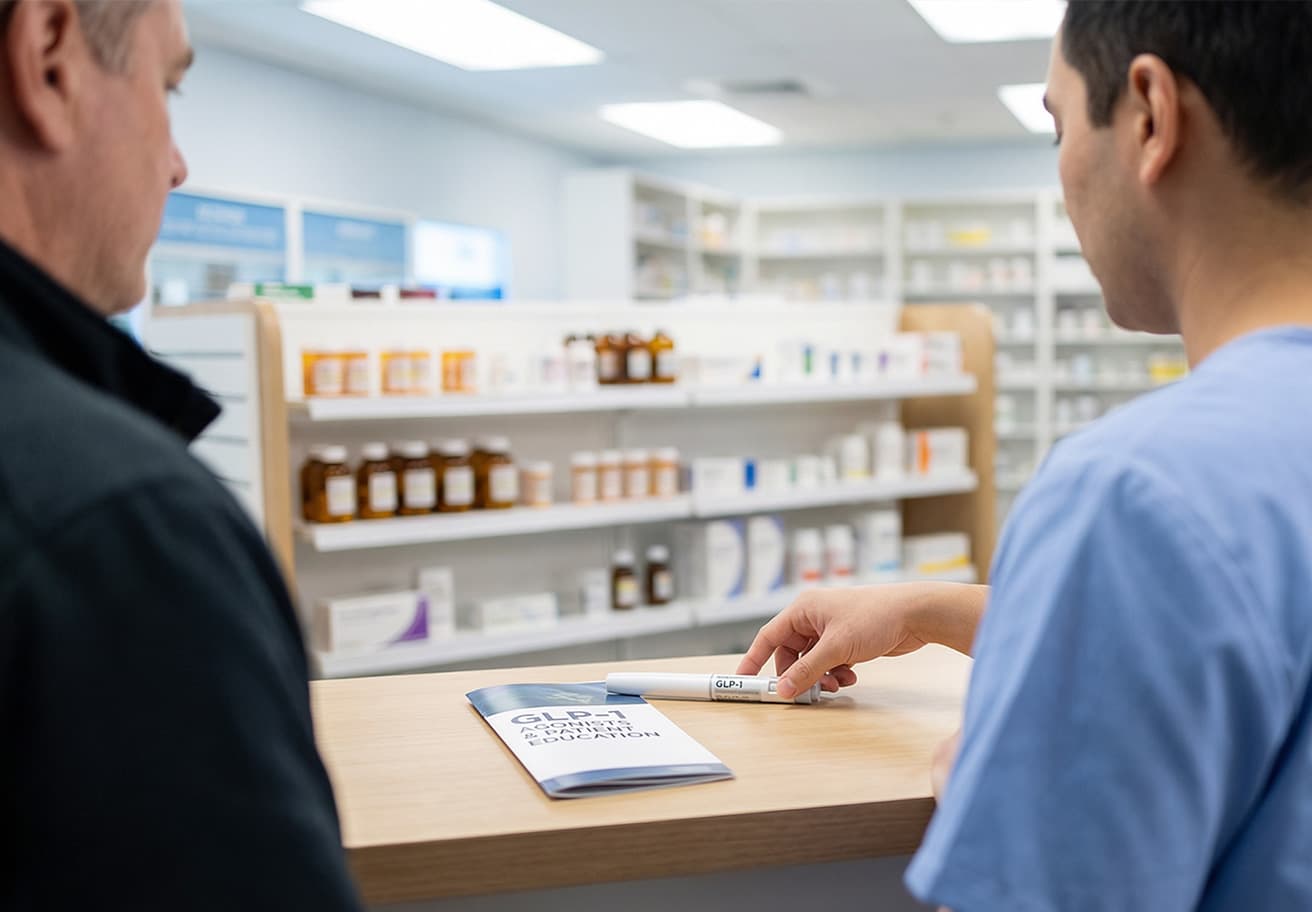
Pharmacist Support for GLP-1 Medications: 7 Ways We Help You Succeed
You finally picked up your GLP-1 medication. Instead of relief, you may feel a new set of worries.
Will nausea show up at work? Will the injection hurt? What happens if you miss a dose?
GLP-1 medications can be a powerful tool, but they come with a learning curve and real-life obstacles. That is why pharmacist support for GLP-1 medications matters. With step-by-step guidance from a pharmacy team you can easily reach, you do not have to figure it out alone.
What Are GLP-1 Medications?
GLP-1 stands for glucagon-like peptide-1, a natural hormone your gut releases after you eat.
GLP-1 medications copy the helpful effects of this hormone to support blood sugar control and appetite regulation. In simple terms, they help your body release insulin when blood sugar is high and slow how quickly food leaves your stomach.
Feeling full sooner is often a benefit, but slower digestion can also cause stomach-related side effects.
Some GLP-1 medications are prescribed for type 2 diabetes, while others are approved for long-term weight management. Your prescriber selects the most suitable option based on your health history, goals, and any other medications you are currently taking.
Why Pharmacist Support for GLP-1 Helps You Stay on Track
Starting a new medication is not just about taking a dose. It is about making the plan work with family schedules, travel, other prescriptions, and your budget.
Pharmacists are medication experts and are often the most accessible members of your health care team. With pharmacist support for GLP-1 therapy, you receive guidance at the moments most likely to derail treatment, including the first dose, the first side effect, and the first refill.
Pharmacist Support for GLP-1: 7 Ways We Help You Succeed
1) We Confirm Your Plan and Explain the Titration Schedule
Many GLP-1 medications begin at a low dose and are gradually increased. This process, called titration, helps your body adjust and reduces side effects.
We make sure you clearly understand:
-
Your current dose and injection day
-
When dose increases occur
-
What to do if the pen or packaging looks different
If anything does not match your prescription, we pause and clarify before you take the dose.
2) We Teach Injection Technique in a Calm, No-Rush Way
Most GLP-1 medications are injected just under the skin using a tiny needle. A brief walkthrough can turn anxiety into confidence.
We help you practice:
-
Choosing an injection site, such as the abdomen, thigh, or upper arm, depending on the product
-
Rotating injection sites to reduce irritation
-
Setting a weekly routine and reminders
Tip for parents and caregivers: Store pens and needles out of children’s reach and label injection days clearly on a calendar.
3) We Help Manage Common GLP-1 Side Effects
The most common side effects of GLP-1 medications are gastrointestinal, meaning they affect the stomach and intestines. Nausea, vomiting, diarrhea, constipation, and stomach discomfort are most often reported, especially after dose increases.
Pharmacist support for GLP-1 medications includes practical, low-effort strategies:
If nausea is the main issue:
-
Eat smaller meals and stop when comfortably full
-
Choose bland, lower-fat foods for a few days
-
Sip fluids throughout the day
If constipation is the main issue:
-
Increase fiber slowly and drink more water
-
Add light movement, such as short walks
-
Ask your pharmacist before using a laxative, especially if you have heart or kidney disease
If side effects are severe, last more than a few days, or prevent you from drinking fluids, contact your prescriber.
4) We Review Your Other Medications to Reduce Risk
This is especially important for older adults and anyone taking multiple medications.
We review your full medication list, including vitamins and over-the-counter products. If you use insulin or diabetes medications that can cause low blood sugar, we help plan safer monitoring and coordinate with your prescriber when needed.
Because GLP-1 medications slow stomach emptying, they can affect how your body processes food and, in some cases, other oral medications.
5) We Give Clear Instructions for Missed Doses and Schedule Changes
Missed-dose instructions vary by product, and confusion can lead to mistakes.
Some weekly GLP-1 medications allow a missed dose within a specific window:
-
Certain Ozempic products allow a missed dose within 5 days
-
Mounjaro products allow a missed dose within 4 days, or 96 hours
We make sure you know the correct rule for your exact medication and help you safely change injection days when schedules shift.
6) We Support Insurance, Prior Authorization, and Refills
Many GLP-1 prescriptions require prior authorization, meaning your insurer requests additional documentation.
Your pharmacy team can help by:
-
Explaining what your insurer is requesting
-
Coordinating with your prescriber’s office
-
Checking covered alternatives when appropriate
-
Setting refill reminders so you do not run out
Medication availability can vary, so we also help you plan ahead during shortages and identify the best refill timing.
7) We Coach for Long-Term Success
GLP-1 therapy works best when it is consistent. Consistency can be challenging during dose increases, illness, travel, or life stress.
Pharmacist support for GLP-1 therapy may include:
-
Check-ins after dose changes
-
Help tracking goals such as blood sugar, weight trends, blood pressure, and symptoms
-
Simple lifestyle guidance that fits your routine
If you are caring for a family member, we can also help organize medication schedules and reminders.
Quick Tips for Staying Comfortable and Consistent
Adherence means taking your medication exactly as prescribed. Small routines make adherence easier.
Try these tips:
-
Select an injection day you can reliably stick to
-
Plan lighter meals on injection day and the day after
-
Keep a water bottle nearby
-
Call the pharmacy when you have two doses left, not one
When to Contact Your Clinician Urgently
Most side effects are manageable, but some symptoms require prompt medical attention.
Contact your prescriber right away or seek urgent care if you have:
-
Severe or ongoing vomiting
-
Inability to keep fluids down
-
Signs of dehydration, including dizziness, fainting, or very dark urine
-
Severe stomach pain that does not improve
-
Symptoms of low blood sugar, such as shaking, sweating, confusion, or fainting, especially if you use insulin or certain diabetes medications
If you are unsure, call the pharmacy. We can help you decide what can be managed at home and what needs urgent evaluation.
Conclusion: You Do Not Have to Do This Alone
GLP-1 medications can support meaningful health improvements, but they should not feel like a solo project.
With pharmacist support for GLP-1 medications, you gain a trusted partner who can teach, troubleshoot, and help you stay on track.
Stop by or call our pharmacy for a GLP-1 check-in. Bring your medication, your questions, and your current medication list so we can build a plan you can stick with safely.
Educational note: This article is for general information only and does not replace medical advice. Always follow your prescriber’s instructions and the medication guide for your specific product.