
- Home
- About Us
- ServicesMedication AdherenceStay on track with your prescriptions at Circle S Pharmacy in Pahokee for better health and savings.Medication SynchronizationCoordinate your prescriptions into one monthly pickup at Circle S Pharmacy for total convenience.Medication Therapy ManagementGet expert medication reviews and personalized consultations at Circle S Pharmacy in Pahokee.Patient CounselingTalk one-on-one with our expert pharmacist in Pahokee to understand your meds and stay healthy.Over the Counter (OTC) ProductsShop affordable over-the-counter health essentials and wellness products at Circle S Pharmacy.Diabetic SuppliesFind reliable diabetic supplies and expert management support right here at Circle S Pharmacy.Prior Authorization AssistanceCircle S Pharmacy simplifies the insurance approval process for Pahokee patients.Pet MedicationsCircle S Pharmacy provides affordable pet medications and easy drive-thru pickup for your furry friends.Dollar ProgramCircle S Pharmacy offers the Dollar Program and medication savings program for affordable Pahokee prescriptions.Amazon Pickup & UPS Access PointCircle S Pharmacy is your local place for secure Amazon and UPS package pickup and shipping in Pahokee.Drive-ThruCircle S Pharmacy offers the only independent drive-thru in Pahokee for fast and easy pickup.Emergency Delivery ServiceCircle S Pharmacy provides emergency prescription delivery to Pahokee residents in urgent situations.12 services availableView all services
- Mobile
- Appointment
- Blogs
- More












Our Blogs
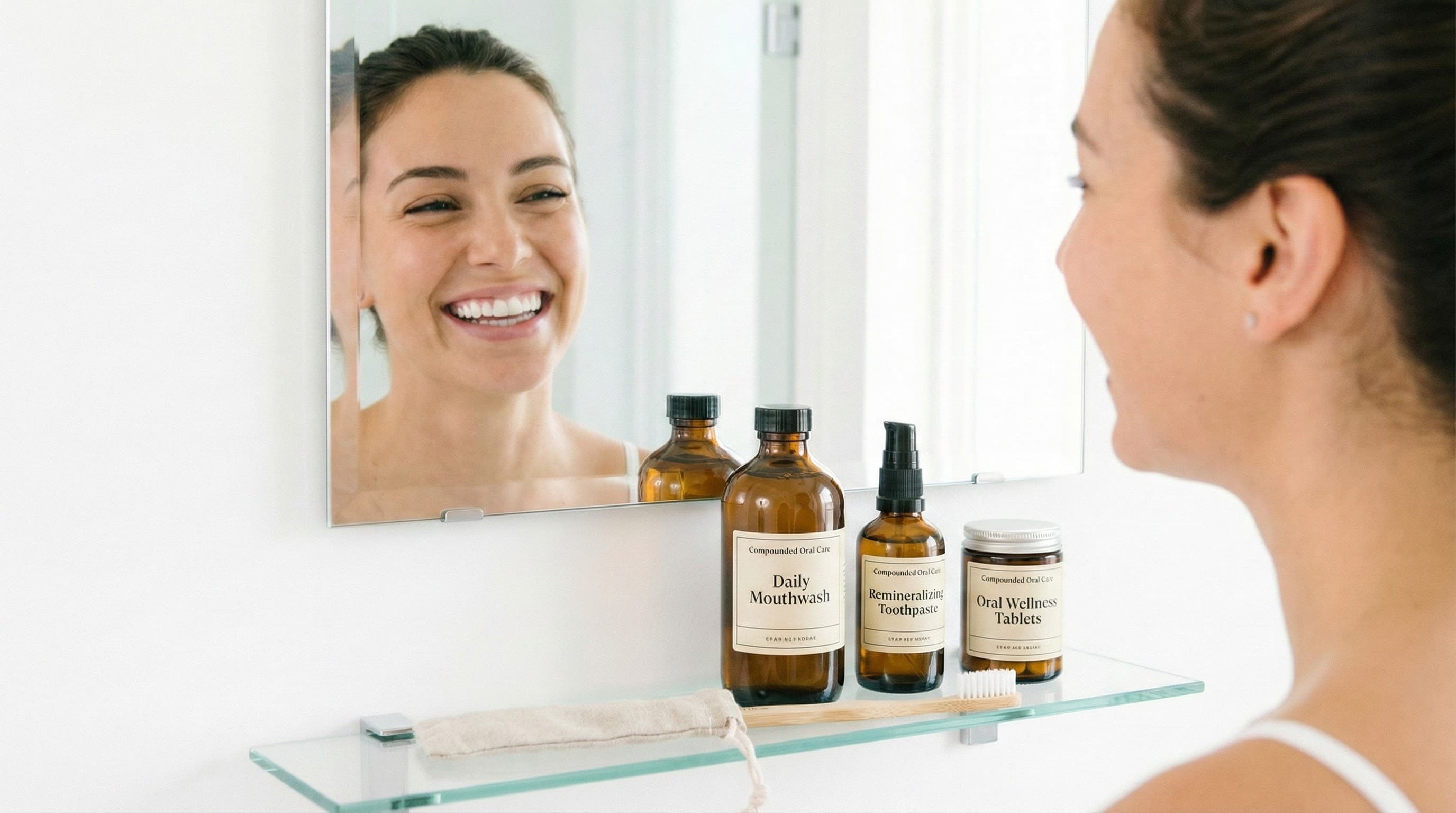
Dental Compounding Benefits: Custom Options for Oral Care
A fluoride gel that stings. A mouth rinse your child refuses because it tastes “too spicy.” Tooth sensitivity that flares up at night. Dental pain after a procedure, when swallowing pills feels impossible.
This is where dental compounding can make a real difference. When mass-produced products do not fit your needs, compounded dental medications may offer a more practical option.
Discover dental compounding benefits and how a compounding pharmacist can work with your dentist to tailor medications for taste, dose, ingredients, and comfort.
What Is Dental Compounding?
Dental compounding is when a pharmacist prepares a customized medication from a dentist’s prescription for a specific patient.
Instead of fixed strengths and limited forms, compounding supports individualized treatment.
Compounded prescriptions can be made in different formulations for oral and dental concerns.
The goal is simple: create a medication the patient can use correctly and consistently.
Why Mass-Produced Medications Do Not Fit Every Dental Patient
Mass-produced medications are designed for large populations. They come in standard doses, standard ingredients, and standard dosage forms.
That works well for many people, but dental needs are often personal and specific.
When a medication is hard to use, patients are more likely to skip or stop treatment early.
Common barriers include:
-
Trouble swallowing tablets or capsules
-
Mouth sensitivity that makes certain products sting or burn
-
Taste issues that lead to skipped doses, especially in children
-
Allergies or sensitivities to dyes, preservatives, alcohol, sugar, or sweeteners
-
Dental anxiety or fear of discomfort during treatment
Dental Compounding Benefits That Support Real Patient Needs
1) More dosage form options for easier use
Compounded dental medications can be prepared in forms that better match daily routines.
The prescription determines what is appropriate.
Options may include:
-
Mouth rinses
-
Gels and pastes
-
Toothpastes
-
Lozenges
-
Throat sprays
-
Lip balms
-
Lollipops (when appropriate and prescribed)
These forms can help with swallowing difficulty, braces, dentures, or sensory sensitivities.
2) Improved taste and texture to support consistency
Taste matters when it prevents someone from using their medication.
Compounding can often improve palatability through flavor and base adjustments.
This can help:
-
Parents giving oral medications to children
-
Adults sensitive to bitterness or strong aftertastes
-
Patients who stop early because the product is unpleasant
3) Ingredient customization for allergies and sensitivities
Some patients need to avoid dyes, preservatives, alcohol, sugar, or specific sweeteners. Compounding can sometimes allow ingredient adjustments to better match restrictions.
Tell both your dentist and pharmacist about allergies and intolerances. Bring a list of known triggers so your care team can plan safely.
4) Targeted delivery where it is needed
Many dental problems affect one specific spot in the mouth.
When prescribed, compounded gels, pastes, and rinses can support localized use.
Targeted delivery may help by:
-
Improving contact time in the mouth
-
Helping patients apply medication exactly where discomfort is located
-
Reducing the need for additional products in some cases
5) Support for dental anxiety challenges
Dental anxiety is common, and it can delay important care. Some patients fear pain or noise, and others struggle with instruments due to a gag reflex.
A compounding pharmacist can work with your dentist on comfort-supporting options when appropriate. That may include dentist-prescribed topical medications designed to numb specific areas.
6) Continuity when standard products are unavailable
Sometimes a commercial product is unavailable or discontinued. A compounding pharmacy can coordinate with the dentist on appropriate alternatives when suitable.
Common Oral and Dental Concerns That May Be Supported With Compounding
Compounded medications can support many needs when prescribed by a dentist.
Below are common topics patients ask about.
Canker sores and mouth irritation
Canker sores can make eating and speaking painful.
A dentist may prescribe a compounded gel, paste, or rinse to soothe tissues and support healing.
Helpful tips:
-
Apply exactly as directed and avoid aggressive rubbing
-
Avoid spicy or acidic foods during flare-ups
-
Ask about timing around meals for best comfort
Dry mouth
Dry mouth can be caused by medications, aging, or certain medical conditions. It can increase irritation, raise cavity risk, and make swallowing difficult.
A dentist may recommend options designed to moisturize oral tissues.
Oral pain and post-procedure discomfort
After dental work, many patients want relief that is effective but gentle.
Depending on the prescription, compounded topical formulations may support localized comfort.
For best results:
-
Use only as directed
-
Avoid eating or drinking after use if instructed, especially with numbing products
-
Call your dentist if the pain is severe or worsening instead of improving
Gum disease and inflammation support
Some gum care plans include topical therapies. A dentist may prescribe a compounded mouth rinse, gel, or paste as part of a broader plan.
Results improve when patients also follow brushing and flossing instructions.
Follow-up visits matter for monitoring progress.
Fever blisters
Fever blisters are commonly caused by herpes simplex virus outbreaks on or around the lips.
Some patients may be prescribed topical preparations as part of a management plan.
Ask your pharmacist about:
-
How to apply properly
-
What to avoid while lesions are active
-
When to seek medical advice for frequent outbreaks
What To Expect From a Dental Compounding Pharmacy
Compounding is personalized, so it differs from picking a product off the shelf.
Each prescription is prepared specifically for you.
A typical process includes:
-
Your dentist prescribes a compounded dental medication.
-
The pharmacist reviews the prescription and confirms the formulation approach.
-
The medication is prepared and labeled with clear directions.
-
You receive storage guidance and a beyond-use date.
-
You get counseling, so you know exactly how to use it.
Because compounded prescriptions are prepared individually, they may require additional preparation time.
Ask your pharmacy when it will be ready.
Practical Tips To Get the Best Results
Using rinses, lozenges, sprays, gels, and pastes
-
Follow directions for contact time
-
Wash your hands before applying gels or pastes
-
Use only the amount and frequency directed
Storage and safety
-
Store the product exactly as the label says
-
Keep lids closed tightly and avoid heat
-
Do not use past the beyond-use date
When to call the pharmacy or dentist
-
Unexpected burning, irritation, or prolonged numbness
-
Taste or texture issues affecting consistency
-
Worsening or non-improving symptoms
-
Any dosing or application questions
Conclusion: A More Personalized Path to Oral Care
When standard medications do not match your needs, compounding can bridge the gap.
Dental compounding benefits include personalized strengths, flexible dosage forms, and ingredient options for sensitivities.
Compounding can also support comfort-focused solutions that help patients follow through with dental care. That can mean fewer struggles at home and a smoother experience at the dentist.
If you or a loved one is dealing with oral pain, dry mouth, canker sores, gum issues, dental anxiety, or a strong gag reflex, contact our pharmacy.
We can coordinate with your dentist to explore compounded options and help you use treatment safely and confidently.